Can Every Type of Fire Extinguisher Be Refilled?
September 24, 2026
Where Should Smoke Detectors Be Installed in a Building?
September 28, 2026
A small office fire can spread quickly when the right equipment isn’t close enough to use. Yet choosing a fire extinguisher isn’t simply about picking the biggest cylinder available. The right fire extinguisher size depends on the fire risks, room layout, occupancy, and location.
An office may have electrical equipment, paper, furniture, pantry areas, storage spaces, and other potential hazards. Each area can create different fire risks, so the equipment needs to match the environment.
For businesses in Pakistan, good office fire safety starts with understanding these risks before deciding what equipment belongs on the premises. The goal is simple: make sure suitable protection is available, accessible, and properly maintained when people need it most.
What Size Fire Extinguisher Does an Office Need?
There isn’t one universal fire extinguisher size that works for every office. The appropriate size depends on the type of fire risk, the area being protected, travel distance to the equipment, and the level of protection required.
A small office with limited hazards may have different needs from a large corporate building with multiple floors, server rooms, kitchens, electrical areas, and storage spaces.
The decision should therefore consider the complete workplace rather than choosing equipment based only on cylinder size.
What Should You Consider?
Before selecting extinguisher capacity, look at the conditions around the workplace. Several factors can change what is appropriate:
- Fire hazards: Identify combustible materials, electrical equipment, cooking areas, and other risks.
- Office layout: Equipment should be accessible without requiring people to travel unnecessarily far during an emergency.
- Area size: Larger or divided spaces may require different protection arrangements.
- Occupancy: The number of people using the building can affect emergency planning.
- Equipment location: Extinguishers should remain visible, accessible, and properly positioned.
- Maintenance needs: The equipment must remain ready for use through regular inspection and servicing.
These points help create a more practical approach to commercial fire protection than simply selecting the largest available extinguisher.
Why Extinguisher Size Matters
Size affects how much extinguishing agent is available and how easily a person can handle the equipment. A larger unit may contain more agent, but it can also be heavier and harder for some people to move and operate.
A smaller unit may be easier to handle but may not provide the same level of protection for every hazard or location.
That balance matters in an office because emergency equipment needs to be both suitable for the risk and practical for the people expected to use it.
Does Every Office Need the Same Size?
No. Two offices in the same building can have different fire protection needs.
A small administrative room may mainly contain desks, documents, computers, and ordinary office materials. A larger workplace may also include electrical rooms, kitchens, workshops, storage areas, or equipment spaces that introduce different hazards.
Because of this, office fire safety should be planned around actual conditions instead of copying the extinguisher arrangement from another workplace.
Consider Different Office Areas
Looking at each area separately can make the assessment more useful. For example:
- Workstations: Computers, furniture, paper, and other common office materials should be considered.
- Pantries: Cooking and heating equipment can create different fire hazards.
- Electrical areas: Electrical equipment requires suitable firefighting arrangements.
- Storage rooms: Higher quantities of combustible materials can change the risk.
- Server or equipment rooms: Sensitive equipment may require additional fire protection planning.
The important point is that one extinguisher arrangement may not suit every room.
Bigger Doesn’t Always Mean Better
It can seem sensible to choose the largest possible extinguisher and place it in the office. However, size alone doesn’t determine whether the equipment is suitable.
A heavy extinguisher may be difficult for some employees to carry. If people cannot comfortably access or operate the equipment, its practical value during an emergency can be reduced.
Good commercial fire protection considers usability alongside fire risk. Equipment should be appropriate for the hazard while remaining accessible to the people expected to respond.
Where Should Office Extinguishers Be Placed?
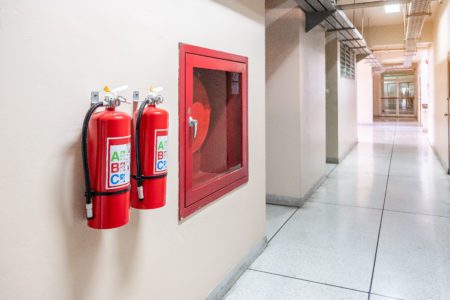
Choosing the correct fire extinguisher size is only one part of the decision. Placement matters just as much because an extinguisher cannot help if employees cannot reach it quickly.
Equipment should be positioned where it can be seen, accessed, and identified without unnecessary obstruction. It should also remain available during normal working conditions.
The exact placement should be determined through a proper fire risk assessment, considering factors such as:
- Office layout and room divisions
- Fire hazards in each area
- Access routes and exits
- Employee movement
- Building size and floor arrangement
- Areas with higher fire risk
This creates a more complete approach to office fire safety than simply counting extinguishers.
Should Offices Have Different Extinguisher Types?
Potentially, yes. Offices can contain several different fire hazards, so selecting equipment based only on size may leave important risks uncovered.
For example, ordinary office materials and electrical equipment may require different considerations from a pantry or other specialised area.
The type of fire extinguisher should therefore be selected alongside its capacity. The extinguisher must be suitable for the fire class it is intended to address.
Think About the Fire Risk First
Before choosing equipment, identify what could actually burn in each area. This gives the selection process a clear starting point.
A practical assessment can consider:
- Combustible office materials
- Electrical equipment
- Cooking or heating equipment
- Flammable materials, where present
- Storage and waste areas
- Specialised machinery or equipment
Once the hazards are understood, the appropriate firefighting arrangements can be planned around them.
What About Offices in Karachi?
Office environments in Karachi can vary greatly, from small commercial spaces to large corporate buildings and multi-floor facilities. The right fire extinguisher in Karachi therefore depends on the specific workplace rather than the city alone.
A professional assessment can consider the building’s layout, occupancy, fire hazards, existing equipment, and emergency arrangements.
For businesses searching for a fire extinguisher in Karachi, the focus should be on suitability, accessibility, quality, and ongoing maintenance rather than choosing equipment based only on price or size.
What Happens After an Extinguisher Is Used?
An extinguisher should not simply be returned to its original location after discharge. Even partial use can affect its readiness for another emergency.
The unit should be assessed and serviced appropriately before being relied upon again. This is where a fire extinguisher refill may become necessary, depending on the equipment and its condition.
Regular maintenance also helps identify problems such as damage, pressure issues, corrosion, or missing components before they affect emergency response.
Why Regular Maintenance Matters
Choosing the right equipment is only the beginning. A fire extinguisher that has been neglected for years may not provide the protection expected from it.
A workplace should have a clear maintenance routine that covers inspection, servicing, and appropriate testing. Employees should also know where firefighting equipment is located and how emergency procedures work.
For businesses, this makes office fire safety part of everyday risk management rather than something considered only after an incident.
Common Maintenance Checks
Routine checks can help identify obvious problems before they become larger concerns. Depending on the equipment and maintenance programme, personnel may look for:
- Visible damage or corrosion
- Blocked access
- Missing or damaged components
- Unsuitable pressure indications, where applicable
- Unclear operating instructions
- Signs that equipment has been used
- Service requirements that have become due
If a problem is identified, the equipment should be assessed by appropriately trained personnel.
What If an Office Needs a Fire Extinguisher Refill?
A fire extinguisher refill should be treated as part of professional maintenance rather than a simple replacement of the extinguishing agent.
The extinguisher should first be checked to determine whether it remains suitable for service. Its condition, components, pressure system, and extinguishing agent all need consideration.
If the unit is damaged or no longer suitable, refilling may not be the correct solution. Proper assessment helps determine whether servicing, repair, testing, or replacement is required.
How Haseen Habib Supports Fire Safety
Office protection requires more than purchasing firefighting equipment. It involves understanding the risks, selecting suitable equipment, placing it correctly, maintaining it, and preparing people to respond safely.
Haseen Habib Trading Pvt. Ltd. provides fire safety equipment and related services across Pakistan, including fire risk assessments, surveys, training, plans, consultancy, firefighting equipment, and fire protection systems.
With a long-standing presence in Pakistan’s fire safety sector and operations serving Karachi, Lahore, Rawalpindi, Islamabad, and other areas, Haseen Habib works with organisations across different sectors.
Build Safer Office Fire Protection
The right fire extinguisher size cannot be decided by looking at the cylinder alone. Your office’s hazards, layout, occupancy, accessibility, and existing fire protection arrangements all matter.
Haseen Habib can help organisations assess their fire safety needs and develop suitable protection arrangements for their facilities. If your workplace needs a professional assessment, equipment guidance, maintenance support, or broader commercial fire protection, take action before an emergency forces the decision.
A safer workplace starts with preparation. Make sure your fire protection arrangements are ready before your people ever need them.
Frequently Asked Questions
What is the best fire extinguisher size for an office?
There is no single size that suits every office. The appropriate capacity depends on the fire hazards, building layout, occupancy, accessibility, and overall fire risk.
Should a large office use larger extinguishers?
Not necessarily. Larger equipment may provide greater capacity but can also be heavier and harder to handle. The selection should balance the fire risk with practical usability.
How often should office extinguishers be maintained?
Maintenance requirements depend on the extinguisher type, applicable standards, service conditions, and inspection programme. Regular checks should identify damage, pressure issues, use, and other service needs.
When does an office need a fire extinguisher refill?
A fire extinguisher refill may be required after discharge or when servicing determines that the extinguishing agent needs replacement. The unit should be assessed before being returned to service.