How Long Do Emergency Exit Lights Work During a Power Failure?
October 31, 2026
Emergency Exit Lighting Requirements for Commercial and Industrial Buildings
November 11, 2026
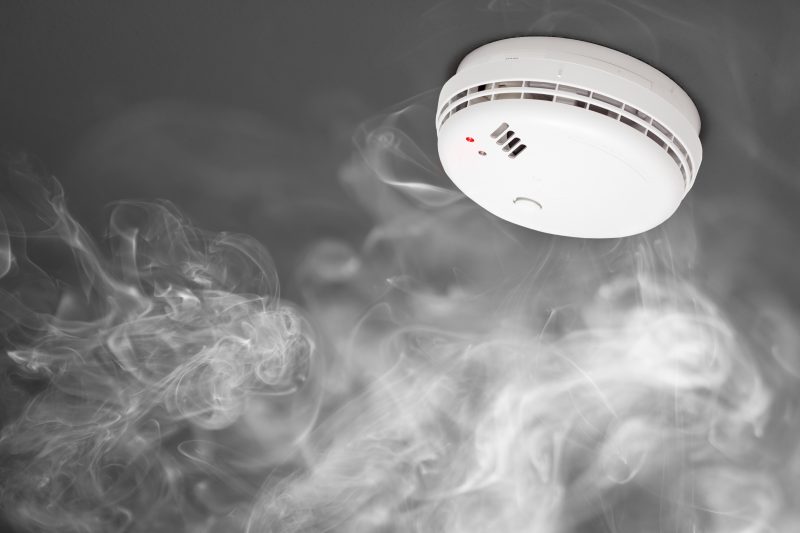
A fire can spread quickly in a large building, especially when smoke takes time to reach a detector. Warehouses, factories, shopping centres, airports, and other large facilities often have high ceilings and wide open spaces. These conditions can make fire detection more challenging.
So, should you choose a beam smoke detector or a standard smoke detector for your building? Both detect smoke and support early fire warnings, but they work differently and suit different environments.
The right choice depends on your building’s layout, ceiling height, airflow, and fire risks. Understanding these differences can help you plan a more suitable fire detection system and protect the people, property, and operations that depend on it.
What Is a Beam Smoke Detector?
A beam smoke detector is a fire detection device that monitors smoke across a large open area. It uses a projected light beam to identify smoke that enters its detection path.
When smoke interrupts or reduces the light reaching the receiving point, the detector can send a signal to the fire alarm system. This allows the system to alert building occupants and responsible staff.
A reflective beam smoke detector uses a reflector placed opposite the detector. The device sends a beam towards the reflector, which returns the light to the same unit.
This arrangement can help monitor wide spaces without installing individual detectors across every part of the ceiling.
What Is a Standard Smoke Detector?
A standard smoke detector identifies smoke within the area surrounding its sensing chamber. It detects smoke particles and sends a signal when the conditions meet its alarm settings.
These detectors are commonly used in offices, corridors, rooms, residential buildings, and other enclosed spaces. Their coverage depends on the detector type, installation position, ceiling height, and applicable fire safety requirements.
In large buildings, several detectors may be needed to cover different rooms, sections, and floors. Their placement must account for the building layout and possible obstacles that could affect smoke movement.
Beam vs Standard Smoke Detectors
The main difference is how both detectors monitor smoke. A beam detector checks a long, open path, while a standard detector monitors smoke around its individual installation point.
Both can support a fire alarm system, but their suitability changes with the building’s design.
Here is how they compare across important factors.
1. Detection Coverage
A beam detector can monitor a wide open area along its projected beam path. This makes it useful for buildings with large halls, high ceilings, and fewer internal partitions.
A standard detector monitors a smaller area around its installed position. Large facilities may need multiple units to provide suitable coverage across different sections.
2. Installation Requirements
Beam detectors need a suitable position for the beam path. The detector and reflector must remain correctly aligned, and structural features must not block the detection path.
Standard detectors are installed at suitable ceiling locations according to the building’s layout and applicable requirements. Their installation does not depend on maintaining a long beam between two points.
3. Building Layout
The building’s internal design can influence which detector works better.
- Open warehouses: Beam detectors may suit large storage areas with high ceilings and fewer partitions.
- Office buildings: Standard smoke detectors may be more suitable for individual rooms, corridors, and enclosed spaces.
- Industrial facilities: The choice depends on ceiling height, machinery, airflow, dust, and other environmental conditions.
- Large commercial spaces: A combination of detection methods may be appropriate where open areas connect with smaller enclosed sections.
4. Maintenance and Inspection
Both detector types need regular inspection and maintenance. Their performance can change if dust, dirt, physical damage, or building modifications affect their operation.
Beam detectors require attention to beam alignment and the condition of the optical path. Standard detectors need checks to confirm that their sensing areas remain clean and unobstructed.
Which Detector Is Better for Large Buildings?
A beam smoke detector can be a suitable choice for large buildings with wide, open spaces and high ceilings. Its ability to monitor an extended area can reduce the need for multiple individual detection points in suitable locations.
However, it is not automatically the best option for every large facility. Buildings with many rooms, partitions, complex layouts, or obstructed detection paths may need standard detectors or a combination of detection methods.
The best choice comes from assessing how smoke is likely to move through the building and where early detection is most important.
Where Are Beam Smoke Detectors Used?
Beam detectors are often considered for buildings where conventional point detection may require many individual units or present installation challenges.
Their suitability depends on the site’s conditions and the design of its fire alarm system.
Warehouses and Storage Facilities
Warehouses often have large open floors, high ceilings, and extensive storage arrangements. A warehouse smoke detector must be selected with these conditions in mind.
Beam detection may be suitable for open sections where a clear detection path is available. Storage racks, suspended equipment, and changing layouts must also be considered during planning.
Factories and Industrial Buildings
Industrial buildings can contain large production areas, high ceilings, and equipment that affects smoke movement. Industrial fire detection requires careful consideration of the working environment.
A beam detector may suit some open production spaces, while other sections may need different detection arrangements based on their specific risks.
Shopping Centres and Exhibition Halls
Shopping centres and exhibition venues can include large atriums, open halls, and high-ceiling areas. Beam detectors may help monitor suitable open spaces where smoke could spread across a wide area.
Separate detection arrangements may still be needed for shops, offices, corridors, and enclosed rooms.
Airports and Transport Facilities
Airports and other transport facilities often contain large public areas, terminal halls, and open circulation spaces. Fire detection planning must consider building size, occupancy, access, and operational requirements.
Beam detectors may be considered for suitable open sections as part of a wider fire detection arrangement.
When Is a Standard Smoke Detector a Better Choice?
A standard smoke detector may be more appropriate where the building contains smaller enclosed areas or multiple internal partitions.
For example, offices, meeting rooms, staff areas, and corridors may require individual detection points. A beam detector may not provide suitable coverage where walls or other obstacles interrupt its beam path.
Standard detectors can also be considered in spaces where their installation and maintenance requirements better match the building’s design.
Can Both Detector Types Work Together?
Yes. A large building does not always need to rely on one type of detector.
A carefully planned fire alarm system can use beam detectors in suitable open areas and standard smoke detectors in enclosed spaces. This allows the detection arrangement to reflect the different conditions found throughout the property.
For example, a warehouse may use beam detection across its main storage hall while standard detectors cover its offices and smaller rooms.
The final arrangement should follow a professional fire risk assessment and applicable fire safety requirements.
What Should You Consider Before Choosing a Detector?
Before selecting a fire alarm detector, assess the building rather than choosing equipment based only on its size.
Several practical factors can affect detection performance and installation suitability.
- Ceiling height: High ceilings can affect how smoke reaches detection devices.
- Building layout: Walls, partitions, storage racks, and structural features can interrupt detection coverage.
- Air movement: Ventilation and industrial airflow can change how smoke travels.
- Environmental conditions: Dust, humidity, and other site conditions may affect detector suitability.
- Occupancy: The number of people using the building and their evacuation needs should influence fire safety planning.
- Maintenance access: Inspection and maintenance must be practical for the facility’s operating conditions.
- Fire risk assessment: The selected arrangement should reflect the actual fire hazards and building requirements.
These checks help prevent unsuitable placement and gaps in detection coverage. They also give facility managers a clearer basis for planning installation, inspection, and future changes.
Why Professional Fire Detection Planning Matters
Even a suitable detector may not perform as expected if it is installed in the wrong location or does not match the building’s conditions.
Professional planning considers the entire fire alarm arrangement, including detector placement, alarm communication, building use, and maintenance access.
For large facilities in Pakistan, this is particularly relevant to industrial sites, hospitals, commercial properties, power plants, and transport infrastructure. Each environment has different risks and operational needs.
Haseen Habib works in the fire safety field, supporting organizations that need reliable fire protection equipment and systems. A proper assessment helps businesses understand their requirements before making decisions about fire detection.
Choose the Right Fire Detection Approach for Your Building
A large building needs a fire detection arrangement that reflects its actual risks. The wrong choice can leave areas without suitable coverage, while poor installation or maintenance can affect the performance of the entire system.
A beam smoke detector may be suitable for wide, open spaces, while standard smoke detectors can serve smaller enclosed areas. Some facilities may need both as part of a planned fire alarm system.
At Haseen Habib, we understand that fire safety decisions affect people, property, and business continuity. Speak with our team about your building’s fire protection requirements and take a responsible step towards safer facilities across Pakistan.
Frequently Asked Questions
1. Are beam smoke detectors suitable for warehouses?
Yes. Beam smoke detectors can suit warehouses with large open spaces and high ceilings, provided the beam path remains clear and installation conditions are appropriate.
2. Can a beam smoke detector replace standard smoke detectors?
Not in every situation. Beam detectors may cover suitable open areas, but enclosed rooms and divided spaces may still require standard smoke detectors.
3. Do beam smoke detectors need regular maintenance?
Yes. They need routine inspection to check alignment, optical path conditions, physical damage, and overall operation. Maintenance should follow the manufacturer’s instructions and the site’s fire safety plan.
4. Which smoke detector is better for a factory?
The right option depends on the factory’s ceiling height, layout, airflow, dust levels, and fire risks. A professional assessment can help determine whether beam detectors, standard detectors, or a combination is suitable.