What Makes a Halotron 1 Fire Extinguisher Different From Other Extinguishers?
September 9, 2026
Which Fire Extinguisher Is Best for Kitchen and Grease Fires?
September 14, 2026

for an emergency. Pressure can change, components can become damaged, access can be blocked, and batteries in emergency systems can weaken over time.
For this reason, Fire Safety Equipment needs regular inspection and maintenance rather than occasional checking. The exact frequency depends on the equipment, building, fire risks, environmental conditions, and applicable requirements. A hospital, factory, office, chemical facility, and warehouse may all need different inspection arrangements.
For facility managers, the goal is simple: identify problems before an emergency exposes them. Regular inspections help you keep essential equipment accessible, functional, and ready when people may need it most.
How Often Should Fire Equipment Be Checked?
There isn’t one inspection schedule for every type of fire safety equipment. Fire extinguishers, alarms, smoke detectors, emergency lighting, sprinklers, hydrants, and suppression systems all have different inspection and maintenance needs.
Routine visual checks should be built into your facility’s safety programme, while detailed testing and servicing should follow the equipment manufacturer’s instructions and applicable fire safety requirements.
The inspection frequency can also change based on the environment. Equipment exposed to heat, moisture, chemicals, dust, heavy use, or physical damage may need closer attention.
Why Regular Inspection Matters
Fire equipment spends most of its life waiting for an emergency. During that time, small problems can develop without being obvious to someone walking past the equipment.
A blocked extinguisher, damaged alarm component, failed emergency light, or low-pressure cylinder can become a serious problem when immediate protection is needed.
Regular inspection helps your team find these issues early. It also creates a clear record of what was checked, what needed attention, and whether corrective action was completed.
Inspecting Fire Extinguishers
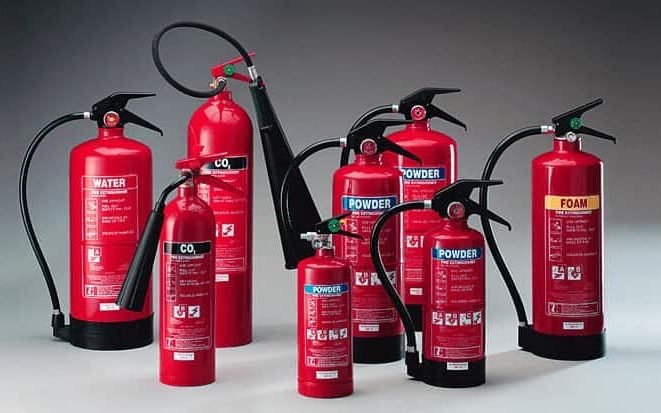
Portable fire extinguishers should be visually checked regularly to make sure they remain in their assigned locations and appear ready for use.
The inspection should look beyond the cylinder itself. A damaged hose, missing safety pin, blocked access, poor pressure reading, or unreadable label can affect how useful the extinguisher will be during an emergency.
A routine check should confirm several basic conditions, including:
- Location: The extinguisher remains where it has been assigned.
- Accessibility: Furniture, stock, vehicles, or equipment aren’t blocking it.
- Physical condition: There are no obvious signs of damage, leakage, or corrosion.
- Pressure: The gauge or indicator appears to be within the appropriate range where applicable.
- Safety pin and seal: They remain correctly fitted and intact.
- Labelling: Operating instructions and identification markings remain readable.
These checks help identify visible problems, but they don’t replace professional servicing when an extinguisher requires maintenance, recharge, testing, or repair.
Checking Smoke Detector Alarms
A smoke detector alarm is designed to provide early warning when smoke is detected. Its effectiveness depends on proper placement, clean sensing components, reliable power, and correct system operation.
Routine checks should ensure detectors aren’t damaged, covered, painted over, obstructed, or exposed to conditions that could affect performance.
Testing should also confirm that the alarm system responds correctly. In larger buildings, this may involve qualified personnel checking the connected devices, control panel, notification appliances, batteries, and other system components.
Inspecting Emergency Exit Lights
Emergency exit lights become especially important when normal lighting fails. They help occupants identify exits and escape routes when visibility may already be poor.
Regular checks should confirm that emergency lights and exit signs are visible, unobstructed, physically intact, and capable of operating when normal power is unavailable.
The exact testing schedule should follow the building’s requirements, system specifications, and applicable standards. Battery condition also deserves attention because an emergency light that works during normal power may still fail when the main supply is interrupted.
Checking Fire Alarm Systems
A fire alarm system usually contains several connected components rather than one standalone device. Depending on the installation, these may include detectors, manual call points, alarm sounders, control panels, batteries, wiring, and monitoring equipment.
Because these components work together, checking only one device isn’t enough. The wider system needs appropriate testing to identify faults that may not be visible during a simple walk-through.
Any warning, fault signal, damaged component, or unusual system behaviour should be investigated rather than ignored.
Inspecting Sprinklers and Hydrants
Fixed fire protection systems also need planned inspection. Sprinklers, hydrants, hose reels, pumps, valves, tanks, and related equipment can be affected by corrosion, physical damage, obstruction, pressure problems, or poor maintenance.
For example, materials stored too close to sprinkler heads can interfere with water distribution. A blocked hydrant connection can also create difficulties when firefighting teams need immediate access.
Because these systems are more technical, inspection and testing should be carried out according to the system requirements and by appropriately trained personnel where specialist work is involved.
What Affects Inspection Frequency?
The right inspection schedule depends partly on the conditions around the equipment. A clean office environment doesn’t create the same challenges as a chemical plant, manufacturing facility, fuel storage area, or dusty warehouse.
Several factors can increase the need for closer monitoring:
- Fire risk: Higher-risk operations require greater attention to fire protection.
- Environmental conditions: Heat, moisture, chemicals, dust, and corrosion can affect equipment.
- Physical activity: Equipment in busy areas may be more likely to get damaged or moved.
- Building occupancy: Hospitals, factories, offices, and public facilities have different risks.
- Equipment age: Older systems may need more frequent assessment.
- Access problems: Storage changes can leave equipment hidden or blocked.
This is why a facility shouldn’t copy another building’s inspection schedule without first considering its own fire risks and equipment.
Inspection and Maintenance Are Different
Inspection and maintenance are often treated as the same thing, but they serve different purposes. An inspection looks for visible problems and confirms that equipment appears present, accessible, and ready.
Maintenance goes further. It may involve servicing, testing, recharging, repairing, replacing components, or carrying out other technical work required to keep equipment operational.
A facility can therefore have a regular inspection programme while still needing separate professional maintenance for its Fire Safety Equipment.
Keep Clear Inspection Records
A good inspection programme should leave behind a clear record. Without documentation, it becomes difficult to know what was checked, when it was checked, or whether a previously identified fault was actually resolved.
Your records don’t need to be complicated. They simply need to provide enough information for your team to track equipment and follow up on problems.
A useful record can include:
- Equipment type and location
- Inspection date
- Condition found
- Faults identified
- Corrective action required
- Person responsible
- Maintenance or repair date
- Final status
For larger organizations, centralized records can also make it easier to monitor multiple buildings, departments, floors, or facilities.
Common Inspection Mistakes
Even facilities with plenty of fire equipment can have weaknesses in their inspection process. The problem often isn’t a lack of equipment but a lack of consistent follow-up.
Common mistakes include:
- Checking equipment only after an incident
- Leaving extinguishers blocked by stock or furniture
- Ignoring damaged equipment
- Forgetting emergency lighting checks
- Failing to test connected alarm systems
- Not recording inspection results
- Delaying repairs after finding faults
- Treating visual inspection as complete maintenance
- Allowing untrained people to perform specialist testing
These mistakes can leave gaps between having fire equipment installed and actually having reliable fire protection.
How to Build an Inspection Plan
A practical inspection plan starts with a complete list of the fire protection equipment installed at your facility. From there, identify what needs routine visual inspection, technical testing, servicing, and replacement.
Assign responsibility for routine checks, define how faults should be reported, and make sure someone follows up until the issue is resolved.
For a larger facility, your plan may cover:
- Fire extinguishers
- Fire alarm systems
- Smoke detectors
- Emergency exit lights
- Sprinkler systems
- Hydrants and hose reels
- Fire pumps
- Fire suppression systems
- Emergency communication equipment
The important part is consistency. Equipment should not be inspected simply because an audit or emergency drill is approaching.
When Should Equipment Be Replaced?
Inspection can identify equipment that needs repair, but some items may eventually need replacement. Continuing to service damaged or obsolete equipment isn’t always the safest option.
Visible corrosion, repeated faults, failed testing, physical damage, unavailable replacement parts, or manufacturer limitations can all indicate that further assessment is necessary.
If equipment cannot reliably perform its intended function, replacing it may be safer than continuing to rely on it.
Strengthen Your Fire Safety Plan
Regular inspection gives facility managers an opportunity to find weaknesses before those weaknesses become emergencies. Fire Safety Equipment should remain accessible, properly maintained, and suitable for the risks present in the building.
Haseen Habib Trading Pvt. Ltd. has been serving Pakistan’s fire and safety sector since 1968, supporting organizations with firefighting equipment, fire protection systems, safety equipment, and related services.
For a facility manager, the next step isn’t simply buying more equipment. It is understanding whether the equipment already protecting your people and property is being inspected, maintained, and kept ready for use.
Protect Your Facility Before It’s Tested
A fire emergency doesn’t give you time to discover that an extinguisher is damaged, an alarm has a fault, or an emergency light won’t work.
Haseen Habib can help organizations across Pakistan assess their fire safety needs and choose appropriate Fire Safety Equipment and fire protection solutions for their facilities. Taking action before an emergency can protect more than property. It can help protect the people who depend on your building every day.
Frequently Asked Questions
How often should fire extinguishers be inspected?
Fire extinguishers should be visually inspected regularly, with the exact frequency depending on applicable requirements, manufacturer instructions, and site conditions. Professional maintenance should be carried out separately according to the required servicing schedule.
How often should smoke detector alarms be checked?
Smoke detector alarms should be tested regularly according to the system manufacturer’s instructions and applicable requirements. They should also be checked for damage, obstruction, contamination, and power-related problems.
How often should emergency exit lights be inspected?
Emergency exit lights should be checked regularly to confirm they remain visible, accessible, undamaged, and capable of operating during power failure. Testing requirements depend on the installed system and applicable building safety requirements.
Who should inspect fire safety equipment?
Routine visual checks can form part of a facility’s internal safety programme. Technical testing, servicing, repairs, and specialist inspections should be handled by appropriately trained and qualified personnel.