Fire Safety Equipment Checklist for Offices, Warehouses & Commercial Buildings
November 13, 2026
What Are the Most Common Mistakes When Using a PASS Fire Extinguisher?
November 20, 2026
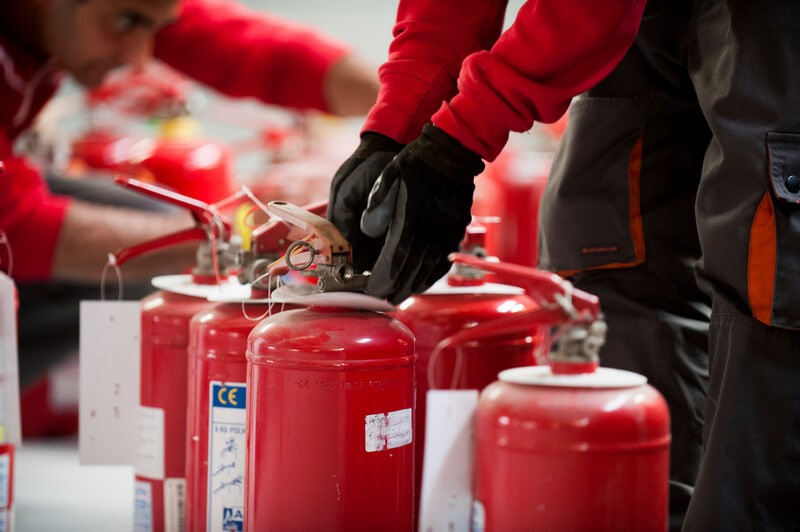
Choosing the wrong Fire Extinguisher during an emergency can put people, property, and critical equipment at greater risk. Different fires involve different materials, so the same extinguisher cannot safely handle every situation.
For example, an extinguisher suitable for burning paper may not be appropriate for a fire involving cooking oil or electrical equipment. Understanding fire extinguisher classes helps you make a safer choice before an emergency happens.
For businesses, factories, hospitals, warehouses, and other facilities across Pakistan, this decision is an important part of fire safety planning. Knowing which extinguisher suits each fire class helps you prepare your workplace, protect employees, and respond more safely when a fire starts.
What Are Fire Classes?
Fire classes identify fires according to the material or substance that is burning. Each class has different characteristics, which affect how the fire should be controlled.
Understanding these categories helps safety professionals select suitable firefighting equipment for different workplace hazards.
The commonly recognized fire classes include:
- Class A: Fires involving ordinary solid materials such as wood, paper, cardboard, and textiles.
- Class B: Fires involving flammable liquids such as petrol, diesel, paint, and solvents.
- Class C: Fires involving flammable gases such as LPG, propane, and butane.
- Class D: Fires involving combustible metals such as magnesium, sodium, and aluminium powder.
- Class F: Fires involving cooking oils and fats, commonly found in commercial kitchens.
- Electrical fires: Fires involving energized electrical equipment. These are treated separately in many fire safety systems, although classifications can vary by standard.
Important: Fire class labels and extinguisher markings can differ between countries and standards. Always check the extinguisher’s label and follow the applicable local fire safety requirements.
Which Fire Extinguisher Suits Each Class?
The right Fire Extinguisher depends on the material burning and the hazards present at the location. Some extinguishers can handle several fire classes, while others are designed for specific risks.
The following sections explain the general suitability of common extinguisher types and their limitations.
Class A: Ordinary Solid Materials
Class A fires involve everyday combustible materials, including wood, paper, cardboard, fabric, and some plastics. These materials can leave hot embers behind, so cooling the burning material is important.
Suitable options may include:
- Water extinguishers: Help cool burning solid materials and reduce the chance of re-ignition.
- Foam extinguishers: Can control certain solid-material fires while also forming a barrier over suitable burning liquids.
- ABC fire extinguisher: Can be used on Class A fires, along with certain other fire classes, depending on its approved rating.
However, ordinary water extinguishers should not be used on energized electrical equipment or fires involving flammable liquids. Always check the equipment’s approved fire rating before use.
Class B: Flammable Liquid Fires
Class B fires involve flammable liquids such as petrol, diesel, paint, oil-based solvents, and industrial chemicals. These fires can spread quickly because burning liquid may move across floors or surfaces.
Suitable options include:
- Foam extinguishers: Suitable for certain flammable liquid fires because they help cover the liquid surface and restrict vapour release.
- CO2 fire extinguisher: Can be suitable for certain liquid fires, particularly where residue-free discharge is preferred.
- DCP fire extinguisher: Can control many flammable liquid fires by interrupting the combustion process.
Water should not be used as a direct stream on burning flammable liquids. It can spread the burning liquid and make the situation worse.
Class C: Flammable Gas Fires
Class C fires involve gases such as LPG, propane, and butane. These fires can become particularly dangerous when gas continues escaping from a damaged pipe, cylinder, or connection.
A suitable DCP fire extinguisher may help control the flames. However, extinguishing the fire without stopping the gas supply can create a serious risk.
Before responding, consider these safety points:
- Stop the gas supply: Only do this if the shut-off point is accessible and it is safe to reach.
- Avoid ignition sources: Do not operate electrical switches or equipment near a suspected gas leak.
- Keep people away: Move employees and visitors to a safe location.
- Call emergency responders: Do not attempt to manage a major gas fire without trained support.
A gas fire should never be extinguished if the gas supply cannot be safely isolated and the escaping gas may continue to accumulate.
Class D: Combustible Metal Fires
Class D fires involve combustible metals such as magnesium, sodium, titanium, and certain metal powders. These materials can burn at extremely high temperatures and may react dangerously with ordinary firefighting agents.
They require specialist Class D extinguishing agents selected for the particular metal involved.
Standard water, foam, CO2, and general-purpose dry powder extinguishers may be unsuitable. Using the wrong agent can increase the danger or cause a violent reaction.
Facilities that handle combustible metals should have a fire risk assessment and a response plan based on the exact materials stored or processed.
Class F: Cooking Oil and Fat Fires
Class F fires commonly occur in commercial kitchens, restaurants, hotels, and food preparation areas. They involve cooking oils and fats heated to high temperatures.
A suitable wet chemical extinguisher is generally used for this fire class. Its agent reacts with hot cooking oil to form a layer that helps suppress flames and prevent re-ignition.
Keep these precautions in mind:
- Never use water: It can cause burning oil to splash and spread.
- Avoid moving the pan: Moving burning oil can spread the fire.
- Turn off the heat: Do this only if the control is safely accessible.
- Use the correct extinguisher: Confirm that it is rated for cooking oil and fat fires.
A fire blanket may also be suitable for certain small cooking fires, provided it can be used safely and correctly.
How Do Common Extinguisher Types Differ?
Once you understand fire classes, it becomes easier to compare the types of fire extinguishers used in workplaces. Each type works differently and has limitations that should be considered before installation or use.
ABC Fire Extinguisher
An ABC fire extinguisher is commonly used for several everyday workplace fire risks. Its dry chemical agent can suppress fires involving ordinary combustible materials, flammable liquids, and flammable gases, subject to its approved rating.
It may be suitable for offices, warehouses, workshops, and other commercial environments where these hazards are present.
However, ABC extinguishers are not suitable for every fire. They should not be treated as a universal option for combustible metal fires or commercial cooking oil fires.
CO2 Fire Extinguisher
A CO2 fire extinguisher releases carbon dioxide to reduce the oxygen available around a fire. It is commonly associated with electrical equipment and certain flammable liquid fires.
Because it does not leave the powder residue associated with dry chemical extinguishers, it may be useful around sensitive equipment.
However, CO2 has limitations:
- It provides limited cooling, so some fires may reignite.
- It may be less effective in open or windy areas.
- Its discharge can create a risk of cold burns.
- It can reduce breathable oxygen in enclosed spaces.
For these reasons, CO2 extinguishers should be selected and used with care.
DCP Fire Extinguisher
A DCP fire extinguisher, or dry chemical powder extinguisher, uses a powder-based agent to interrupt the chemical reaction that keeps a fire burning.
Depending on its classification and approved rating, it may be suitable for fires involving ordinary combustibles, flammable liquids, and flammable gases.
Its main limitations include:
- Powder residue can damage sensitive electrical and electronic equipment.
- Visibility may become poor during discharge.
- Cleaning can be difficult after use.
- It may not provide enough cooling to prevent re-ignition.
The correct DCP fire extinguisher should always be selected according to the fire risks present at the facility.
How to Choose the Right Extinguisher for Your Workplace
Selecting firefighting equipment requires more than matching an extinguisher to a fire class. You also need to understand the materials, equipment, activities, and people present at your site.
A warehouse, hospital, chemical plant, and commercial kitchen have different fire risks. Their extinguisher requirements should reflect those differences.
Consider the following factors during selection.
- Identify fire hazards: Check for combustible materials, flammable liquids, gases, electrical equipment, and cooking oils.
- Assess the work environment: Consider the size of the facility, room layout, ventilation, and access routes.
- Check extinguisher ratings: Confirm that each extinguisher is approved for the fire classes it may need to handle.
- Consider equipment sensitivity: Powder discharge may damage machinery, control panels, and electronic equipment.
- Review placement: Extinguishers should be accessible and positioned where employees can reach them safely.
- Plan for employee training: Staff should understand which extinguisher to use and when evacuation is the safer choice.
A professional fire risk assessment can help identify hazards that may not be obvious during a routine workplace inspection.
Common Mistakes to Avoid
Even a suitable extinguisher can become ineffective or dangerous if it is selected, placed, or used incorrectly. Some common mistakes can be avoided through proper planning and employee awareness.
Watch out for these issues:
- Using one extinguisher for every fire: Different materials require different extinguishing agents.
- Ignoring electrical hazards: Water-based extinguishers can create an electric shock risk when equipment remains energized.
- Using water on burning oil: This can cause flames and hot oil to spread rapidly.
- Choosing equipment without checking its rating: Similar-looking extinguishers may have different approved applications.
- Ignoring maintenance: Damaged, discharged, or poorly maintained equipment may fail during an emergency.
- Skipping staff training: Employees may waste valuable time trying to identify the correct extinguisher during a fire.
Regular inspections and practical fire safety training help reduce these risks. Employees should also know when to leave the area instead of attempting to fight a fire.
Why Professional Fire Safety Planning Matters
A fire extinguisher is only one part of an effective workplace fire safety arrangement. Businesses also need suitable detection systems, emergency exits, evacuation procedures, and trained personnel.
For larger facilities, selecting equipment without assessing the complete environment can leave important risks uncovered.
This is particularly relevant for industrial plants, oil and gas facilities, hospitals, airports, warehouses, and commercial buildings across Pakistan. Each location may have different fire hazards and operational requirements.
Haseen Habib Trading (Pvt.) Ltd. works in the fire safety field, supporting organizations with fire protection equipment and related safety requirements. A planned approach helps businesses consider their actual risks rather than relying on a general equipment checklist.
Protect Your Workplace With the Right Fire Safety Equipment
Choosing the correct Fire Extinguisher can make a critical difference during the early stages of a fire. However, the wrong equipment or an untrained response can put employees and property at greater risk.
Your workplace deserves a fire safety plan based on its actual hazards, not assumptions. Haseen Habib Trading (Pvt.) Ltd. encourages organizations across Pakistan to take fire prevention seriously and review their firefighting equipment before an emergency occurs.
Explore Haseen Habib’s fire safety solutions and take the next step towards a safer workplace.
FAQs
1. Which fire extinguisher is suitable for most workplaces?
An ABC-rated extinguisher may cover several common workplace fire risks, including ordinary combustibles, flammable liquids, and flammable gases. However, it cannot replace specialist equipment for hazards such as combustible metals or cooking oils.
2. Can a CO2 fire extinguisher be used on all electrical fires?
A CO2 extinguisher may be suitable for certain electrical equipment fires. However, suitability depends on the equipment, surrounding materials, and extinguisher rating. Always follow the manufacturer’s instructions and isolate the power supply when safe.
3. What is the difference between ABC and DCP fire extinguishers?
ABC describes an extinguisher’s fire rating for certain classes, while DCP refers to dry chemical powder as an extinguishing agent. An ABC extinguisher commonly uses dry chemical powder, but not every DCP extinguisher has an ABC rating.
4. How often should workplace fire extinguishers be inspected?
Fire extinguishers should receive regular visual checks and professional servicing according to the manufacturer’s instructions and applicable safety requirements. Inspection frequency may vary depending on the equipment, environment, and local regulations.